
 Get Well Natural, LLC
  Kidney Function & Regeneration Health
  Platelet & Blood Cell Health
  Prostate, Flow & Function Health
  General Mind & Body Health
  Heart, Cholesterol & Cardio Health
  Allergy-Free Body
  Anxiety & Stress
  Blood Platelet Counts & Function
  Blood Pressure Health
  Kidney Health
  Immune System Health & Balance
  Prostate & Urinary Health Function
  Blood Sugar Balance
  Cardiovascular Heart Health
  Detoxification & Healthy Cells
  Women's Health
  Liver Regeneration
  Pain-Free Body
  Water & Air Filtration


Kidney Detox: 4 Myths Debunked + Dr. Shaw's Approach to Responsible Kidney Support
Posted by Get Well Natural LLC on Oct 13th 2026
The phrase "kidney detox" gets searched thousands of times every month. And yet, much of what people find online is misleading or incomplete.
Juice cleanses, herbal teas marketed as kidney flushes, and aggressive supplement stacks fill the market with bold promises. But here is the problem: your kidneys are not a filter that needs cleaning from the outside. They are already doing that job, around the clock, every day.
So if you are looking for a safe kidney detox, what should you actually look for? And which popular ideas about kidney detox are worth dropping entirely?
This article sets the record straight, debunks four widely held myths, and outlines the approach Dr. D. Graeme Shaw, M.D., used with his own patients over decades of integrative practice.
Note: This article is for educational purposes only. Kidney supplements are dietary supplements, not treatments for kidney disease. Always consult your physician or nephrologist before starting any supplement program.
Why "Detox" Is the Wrong Word for Kidneys
Your kidneys filter about 150 quarts of blood every day. They remove waste products, regulate mineral balance, and maintain the fluid equilibrium your entire body depends on. This process does not pause. It does not get sluggish from a lack of green juice.
When people talk about a kidney detox, they usually mean one of two things: either they want to support the kidneys' natural filtration capacity, or they want to reduce the environmental and metabolic load placed on them. Both are valid goals. The word "detox" just happens to be imprecise enough to invite a lot of bad advice.
Understanding the difference matters before you spend money on anything.
4 Kidney Detox Myths Worth Knowing
Myth 1: Aggressive Juice Cleanses Flush Your Kidneys
This is the most common one. The idea is that flooding the body with liquid helps push toxins out faster. In practice, drinking enough water supports healthy kidneys, but more is not necessarily better, and juice-only cleanses are not a proven way to "flush" them. Some ingredients often used in green juices, such as spinach, are high in oxalate, which matters for people who have, or are prone to calcium oxalate kidney stones.
Myth 2: Any Herbal "Kidney Tea" Will Support Your Kidneys
Many single or blended herbal kidney teas sold online have little published clinical research behind them. Some use laxative herbs that cause fluid loss and are mistaken for "cleansing." Increased urination alone is not a sign that a product is supporting the kidneys. For this and other reasons, it is worth having a better understanding of how best to support the kidneys natural detox process.
Herbs such as Alisma, Astragalus, and Rehmannia have a long history in traditional Chinese kidney formulas for thousands of years, and many types of kidney supportive herbs have been studied in modern laboratory research studies. Modern research studies usually focus on the benefits from a single herb while traditional Chinese Medicine formulas typically combine several herbs rather than relying on one due to their synergistic effect.
Myth 3: Short Cleanses Produce Lasting Kidney Benefits
A three-day or seven-day cleanse makes for a compelling marketing story. But kidney function, like cardiovascular health or blood sugar regulation, is generally supported through consistent, long-term habits rather than short bursts of intervention.
The medical doctors and master herbalists who developed Get Well Natural's formulas typically suggested an initial 3-to-6-month course for their patients who chose herbal support. They reasoned that lasting support takes consistency, not a quick fix. Whether an herbal supplement is right for you, and for how long, is a decision best made with your healthcare provider who is knowledgeable in herbal medicine.
Myth 4: All Supplements Labeled "Kidney Support" Are Good For Everyone
People living with a solitary kidney, those on blood pressure or diabetes medications, and anyone at Stage 3 CKD or higher need to approach any new supplement with caution. Many supplements contain ingredients which may be synthetic or too stimulating for the kidneys thus causing more stress on the kidneys. When kidney function is already reduced any substance that adds more stress to the kidneys may cause worsening kidney function. For this reason, Get Well Natural kidney supportive products contain no synthetic, lab-created, or stimulant type ingredients. Only natural, balancing herbs are contained inside each vegetarian capsule.
Key Insight: Early kidney disease usually has no symptoms, so testing is the only way to know how well your kidneys are working. NIDDK advises testing for people with diabetes, high blood pressure, heart disease, or a family history of kidney failure. A blood test measures GFR, and a urine test checks for albumin (protein).
What Dr. Shaw's Approach to Kidney Support Actually Looked Like
Dr. D. Graeme Shaw, M.D., was board-certified in internal medicine, trained at Creighton University School of Medicine, and practiced at integrated medical facilities in California from
1994 to 2023. He combined that training with Eastern Medicine, and the herbal formulas now offered by Get Well Natural were part of the integrative approach he took with patients who had kidney concerns.
His approach to kidney support was not a "detox." It was a structured, multi-month plan built around three principles:
Reduce the kidneys' workload by identifying and addressing root causes. High blood pressure, diabetes and stored toxins in the body, were the three most common drivers of kidney dysfunction from his experience. Diet and stress management also play an important role.
- Support the body's natural filtration systems with targeted herbal formulas developed through decades of clinical use. Specifically, the combination of Kidney Well II, Alisma, and Phyto Antioxidant was the core of what the formulators recommended.
- Stay in step with your doctor's testing. GFR and urinary protein tests give you and your doctor real information about how your kidneys are working. Dr Shaw used these types of testing during all of his patients’ kidney health protocols to prove the efficacy of the protocols.
Dr. Shaw's advice to his patients was simple: "Stay calm, stay proactive."
The Herbs Behind the Approach: Why These Three Products
The three-product combination Dr. Shaw's formulators recommended is based on the same synergistic logic that governs classical TCM prescriptions: multiple herbs addressing multiple pathways together. But, unlike TCM formulations, Get Well Natural’s formulators discovered the benefit of using fewer overall ingredients versus TCM, after they discovered even better, and broader health benefits from the masses.
Kidney Well II (Foundational Formula)
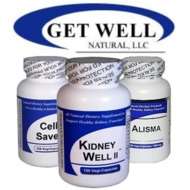
Kidney Well II is a seven-herb formula containing Alisma, Astragalus, Cyperus, Dioscorea, Poria, Rehmannia, and Ganoderma. It was developed over 40 years of clinical use by a collective of Medical Doctors and Master Herbalists in Vietnam, Russia, and the United States, and is designed to provide ideal support for healthy kidney function.
Alisma (Single-herb Extract)
Alisma is a concentrated single-herb extract of Alisma Plantago Rhizome, one of the most consistently used herbs in classical Chinese kidney formulas, where it has traditionally been included for kidney and fluid-balance support. Modern research is early. A 2024 laboratory study tested a chemically modified (carboxymethylated) Alisma polysaccharide on human kidney cells exposed to calcium oxalate crystals and found less oxidative stress and inflammation. It was a cell-model study of a modified compound, not of this product, and it does not show the same effect in people.
Phyto Antioxidant (Oxidative Stress Support)
Phyto Antioxidant is a five-herb formula containing Red Ganoderma, Eclipta, Morinda, Herba Taraxaci (Dandelion), and Green Tea Extract, formulated as an antioxidant blend to support overall kidney and urinary protein level wellness.
All three are free of common fillers and encapsulated in Kosher, vegan capsules, and Kidney Health Kit 1 contains all three.
What Responsible Kidney Support Looks Like Day-to-Day
Outside of herbal supplementation, the integrative approach recommended in Dr. Shaw's practice included several consistent lifestyle principles:
Hydration, done correctly:
- Adequate daily water intake helps maintain blood volume and blood pressure, which supports the pressure gradients necessary for effective kidney filtration.
- People with kidney failure may need to limit fluids, so ask your doctor how much is right for you.
- This is not a cleanse. It is basic physiology.
Dietary choices that reduce kidney workload: Reducing or increasing salt intake can better manage blood pressure, one of the two primary causes of kidney dysfunction. Many people are unaware that too much or too little sodium can cause unhealthy blood pressure. In regards to food, lean proteins, grains, fruits, and vegetables form the backbone of a kidney-supportive diet according to licensed nutritionists. If your kidney function is reduced, ask your nephrologist or renal dietitian about potassium, phosphorus, and protein limits first.
- Stress reduction as a real clinical variable: Eastern Medicine has long recognized the relationship between chronic stress and organ imbalance. Activities like tai chi, meditation, and mindful movement are part of a complete kidney health approach, alongside (not in place of) medical care.
- Working with your doctor, not around them: If you have Chronic Kidney Disease, including Stage 3 (eGFR 30 to 59) or higher, or take any prescription medication, keep your nephrologist or physician involved in every decision, including whether a supplement is appropriate. If your physician has little to no education/understanding about any dietary supplement ingredients you take, it can be very helpful to find one that does so you can receive an educated recommendation.
The Bottom Line on Kidney Detox
Your kidneys may not need a three-day juice flush. Kidneys need consistent, informed support that respects their actual biology.
The strategies worth considering are those built on long clinical histories, transparent ingredients, and a multi-pathway approach. That is the difference between wellness marketing and the kind of herbal formulation work that practitioners like Dr. Shaw relied on for decades.
If you are exploring kidney health supplements as part of a broader approach to long-term wellness, Get Well Natural's formulas were developed by a collective of medical doctors and master herbalists for their own patients. Learn more about Kidney Well II, Alisma, Phyto Antioxidant, and Kidney Health Kit 1 on the Get Well Natural website, and talk with your physician before starting any supplement.
Frequently Asked Questions
Q.1 What does a kidney detox actually do?
The term is imprecise. A kidney detox is generally advertised as a way to flush toxins, remove waste, and support urinary health. In truth, the kidneys do the detoxing. And when properly supported, the kidneys do a much better job. This is why responsible kidney support strategies focus on a combination of reducing stress and strain on the kidneys, while providing key herbal, dietary and lifestyle support to achieve more healthier filtration and detox functions.
Q.2 Are kidney detox teas safe?
It depends entirely on the ingredients. Many mass-market kidney teas are built around a single herb, and some include herbs with laxative effects. Review the ingredient list of any tea or supplement with a kidney health claim, ideally with a knowledgeable healthcare provider.
Q.3 What herbs are actually researched for kidney support?
Several herbs used in classical Eastern Medicine formulas are now being studied in modern research. These include Astragalus, Alisma, Rehmannia, and Ganoderma. These appear in both TCM prescriptions and in the formulas Get Well Natural produces. In addition to large scale modern research, there is an entire category of smaller based studies. While smaller in scale the anecdotal research performed on these herbs and others, have yielded important therapeutic discoveries with real world experiences.
Q.4 How long does real kidney support take?
The physicians and Master Herbalists behind Get Well Natural's formulas typically suggest an initial 3-to-6-month course for their patients who choose these herbal formulas, reasoning that consistent support over time works better than a quick fix. They understood that the body can regenerate the kidneys if the body was properly supported. They taught their patients that regeneration and a restoration of healthier kidney functions is a slow process, but also a very achievable goal.
Q.5 Can I take kidney supplements if I am on medication?
For Get Well Natural’s kidney supportive products such as Kidney Well II, Alisma, and Phyto Antioxidant, the doctors and master herbalist that designed these recommended that these be taken at least 2 hours apart from any drug. Their reasoning, is due to the fact that drugs are strong chemicals and taking them too close together could cause these gentle balancing herbs to become less effective. In addition, they didn’t recommend any herb be taken too close to any drug due to possible negative interactions. As far as non-Get Well Natural kidney supplements, we recommend you speak to your healthcare provider.
Disclaimer: These statements have not been evaluated by the U.S. Food and Drug Administration. These products are not intended to diagnose, treat, cure, or prevent any disease. TCM is an acronym for Traditional Chinese Medicine.